somewhere around the third “make me ghibli” post on my feed, i quietly stopped paying attention.
not to the tool. to the trend.
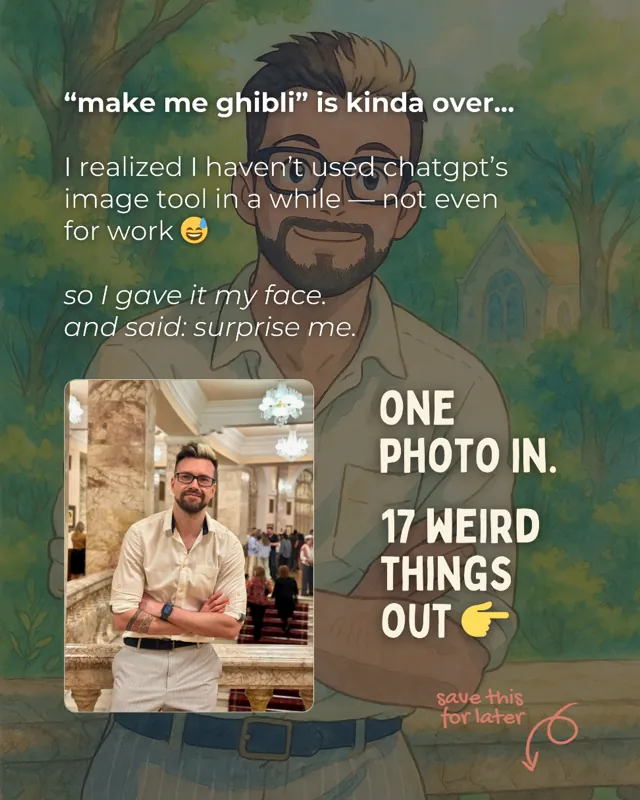
so i waited until it blew over, then gave ChatGPT my face and said: surprise me.
one photo. no plan. just curious what it could actually do when i stopped following what everyone else was doing.
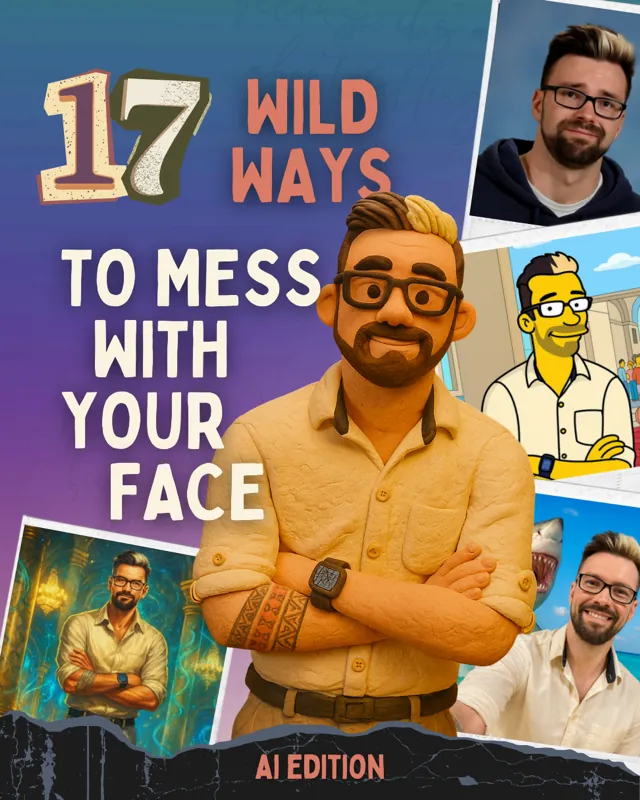
seventeen weird things came out.
some are funny. a few are kind of creepy in a good way. one or two i’d actually use for content. and the rest gave me a much better sense of how specific these prompts need to be to actually work.
all 17 prompts are below, exactly as i wrote them.
before you start
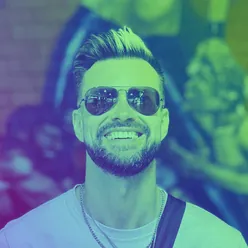
you need one thing: a clear photo of your face. not perfect — just decent lighting, frontal or 3/4 angle, no strong shadows or heavy filters.
the prompts below are specific by design. when i gave vague directions i got vague results. when i described the exact style, what to avoid, and the mood i wanted — it delivered.
copy-paste these directly. then experiment with your own adjustments.
1. shark selfie
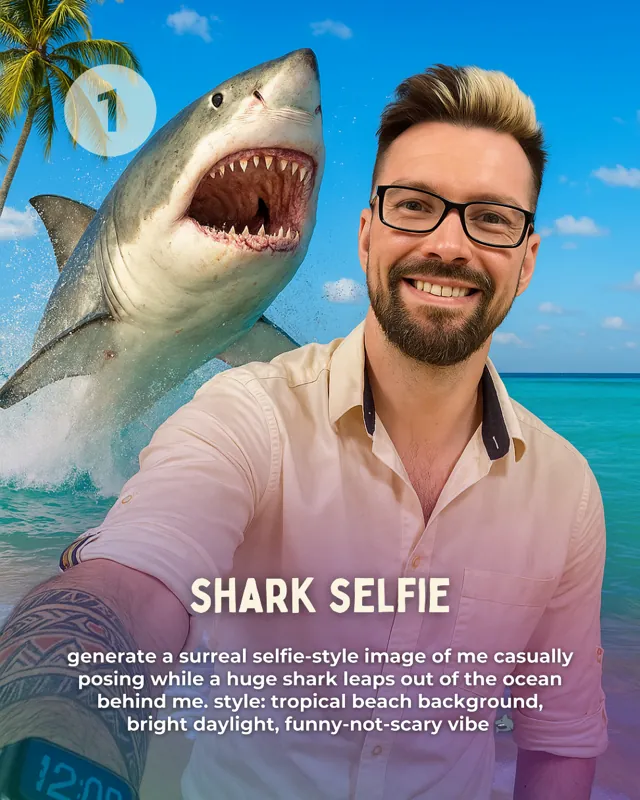
the trick here is the contrast: you’re completely calm, the chaos is erupting behind you. that gap between your expression and the background is what makes it funny.
the phrase “funny-not-scary vibe” is doing a lot of work. without it, you get something closer to a horror movie still. with it, the tool understands the tone. also a good first test for whether your photo has enough clarity — if the likeness looks off here, try a different selfie before running the rest.
prompt: generate a surreal selfie-style image of me casually posing while a huge shark leaps out of the ocean behind me. style: tropical beach background, bright daylight, funny-not-scary vibe
2. simpsons me
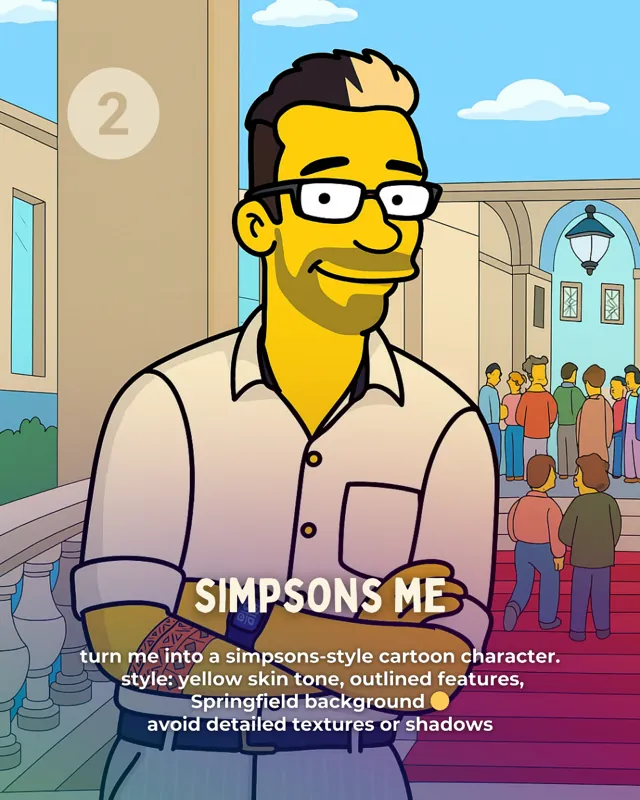
this works better than you’d expect. the “avoid detailed textures or shadows” note pulls the result toward actual Simpsons visual language instead of a weird semi-realistic cartoon hybrid that looks like neither.
glasses and facial hair survive the translation well. if you have either, they carry through cleanly.
prompt: turn me into a simpsons-style cartoon character. style: yellow skin tone, outlined features, Springfield background. avoid detailed textures or shadows
3. yearbook 2000s
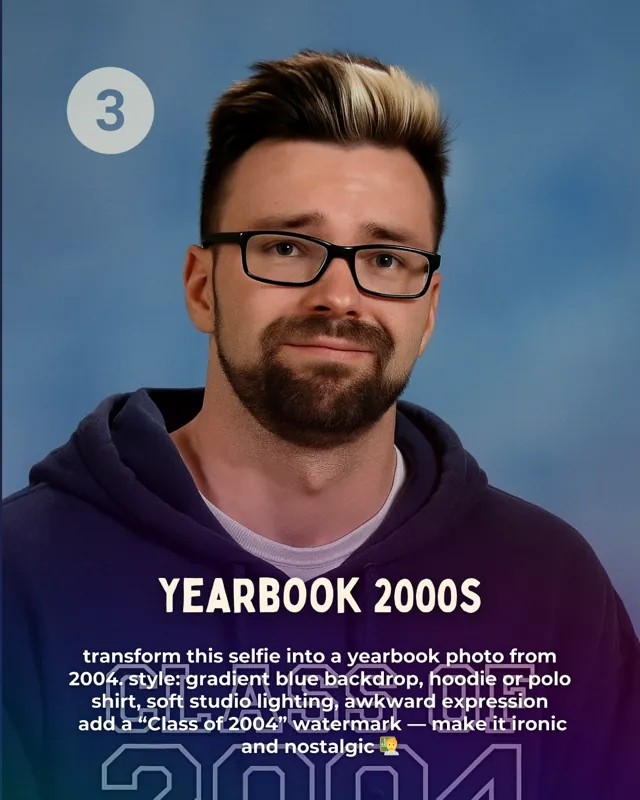
if you went to school in the early 2000s, this one hits different. the gradient blue backdrop is extremely accurate. somehow ChatGPT knows exactly what that looked like.
the “class of 2004” watermark and “awkward expression” instructions are what separate this from just a portrait. without them you get a generic photo. with them you get the nostalgia.
prompt: transform this selfie into a yearbook photo from 2004. style: gradient blue backdrop, hoodie or polo shirt, soft studio lighting, awkward expression. add a “class of 2004” watermark — make it ironic and nostalgic
4. trading card parody
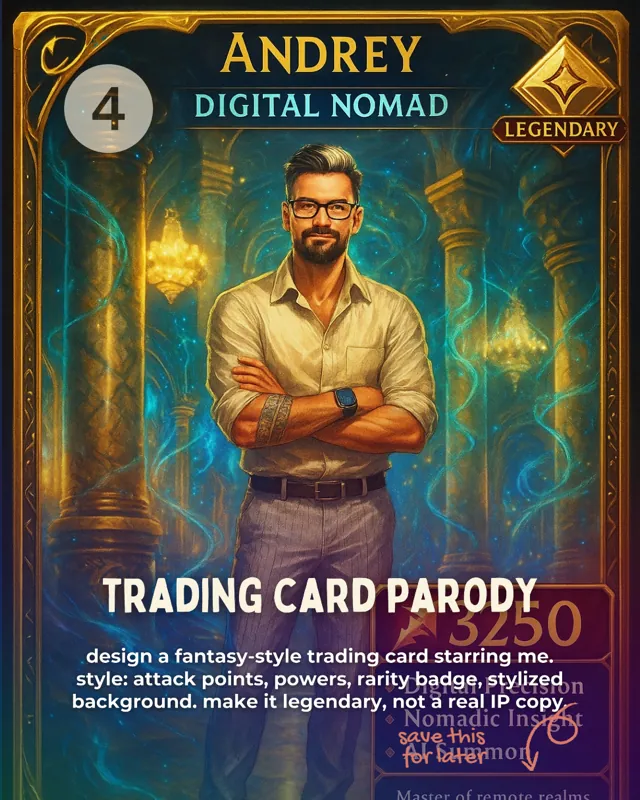
i added “digital nomad” as my title. it assigned “legendary” as the rarity tier without me asking. fair.
this one is actually useful beyond just being fun. trading card versions work well as profile photos, LinkedIn banners, newsletter headers. they look creative without screaming “i spent three hours on this.” the “not a real IP copy” note keeps it original — without it the output can get too close to existing card games.
prompt: design a fantasy-style trading card starring me. style: attack points, powers, rarity badge, stylized background. make it legendary, not a real IP copy
5. wes anderson scene
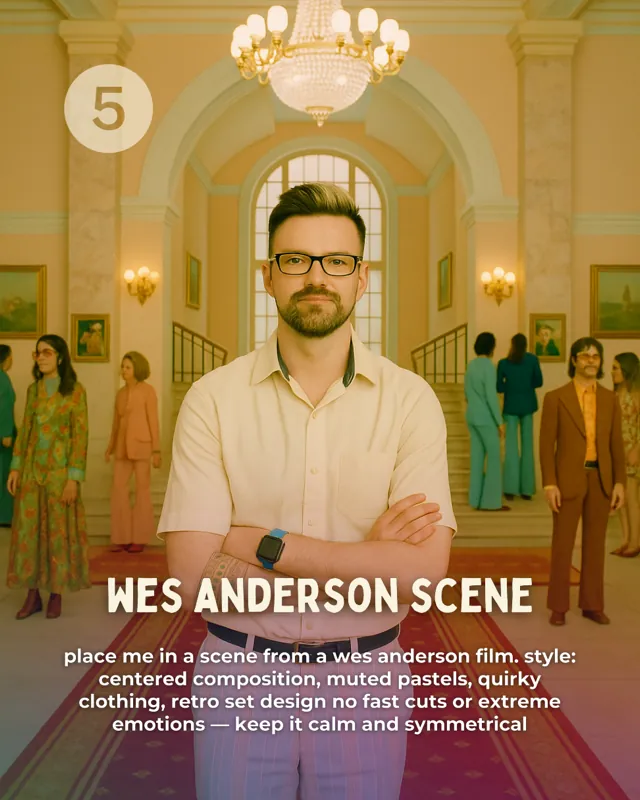
the muted pastels and centered composition come through cleanly. what can go wrong: ChatGPT sometimes oversaturates or leans too quirky.
“keep it calm and symmetrical” is what pulls it back into actual Wes Anderson territory instead of just “colorful indie film.” probably one of my favorites from this batch — the tone is very specific and the model gets it.
prompt: place me in a scene from a wes anderson film. style: centered composition, muted pastels, quirky clothing, retro set design. no fast cuts or extreme emotions — keep it calm and symmetrical
6. arcane style portrait
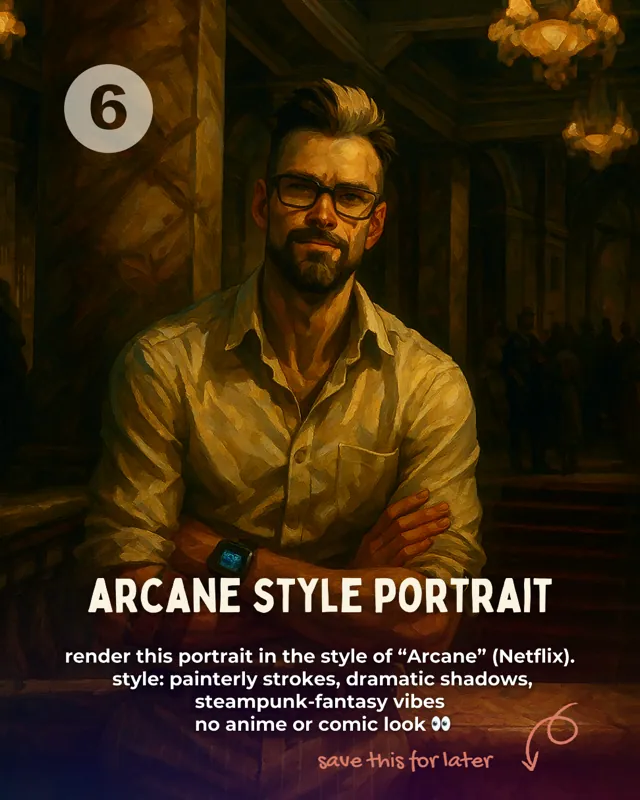
if you’ve seen Arcane on Netflix, you know the visual style: painterly, moody, not quite realistic but not flat cartoon either. it’s genuinely stunning to get right.
“no anime or comic look” is critical here. without it, the tool drifts into generic anime and loses the whole Arcane aesthetic. dramatic shadows do the rest.
prompt: render this portrait in the style of “Arcane” (Netflix). style: painterly strokes, dramatic shadows, steampunk-fantasy vibes. no anime or comic look
7. me as a plush toy
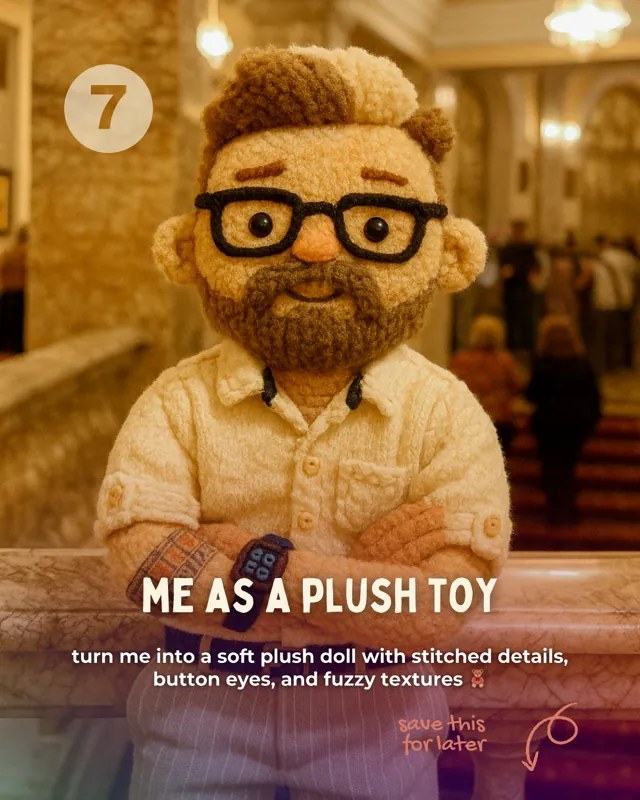
surprisingly unsettling. in a funny way. the stitched details and button eyes land better than i expected — it genuinely looks like something that belongs in a gift shop.
this is a short prompt with a clear result. sometimes the simpler ones perform better than the elaborate ones. if the likeness is off on more complex prompts, try this one first to sanity-check your photo quality.
prompt: turn me into a soft plush doll with stitched details, button eyes, and fuzzy textures
8. rpg character sheet
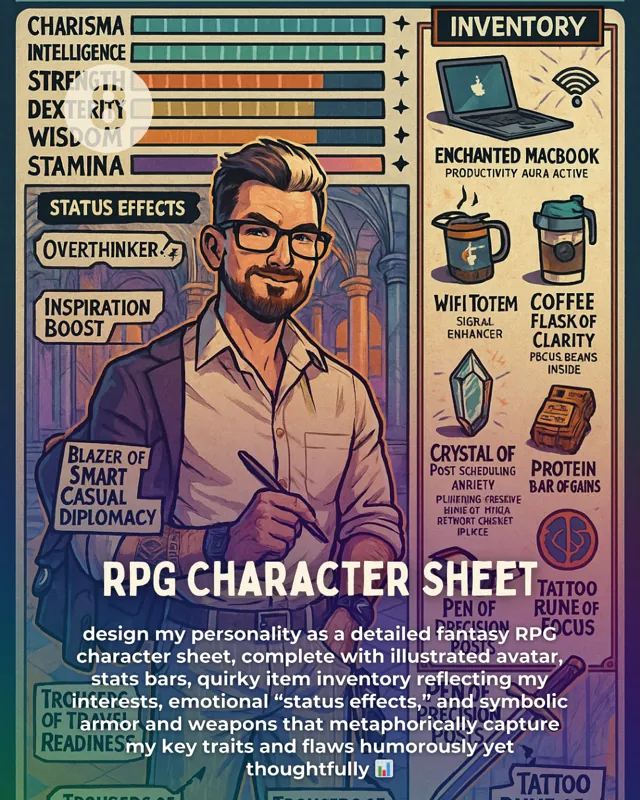
the most involved prompt on the list — and the most interesting result. mine came back with “Overthinker” as a status effect and “Enchanted MacBook: productivity aura active” in the inventory. accurate.
the specificity of the output is what makes this one worth the longer prompt. if you work on personal brand content at all, this is one i’d invest time in. it reads as clever without trying too hard, and it’s the kind of thing people actually save and share.
prompt: design my personality as a detailed fantasy RPG character sheet, complete with illustrated avatar, stats bars, quirky item inventory reflecting my interests, emotional “status effects,” and symbolic armor and weapons that metaphorically capture my key traits and flaws humorously yet thoughtfully
9. sticker pack
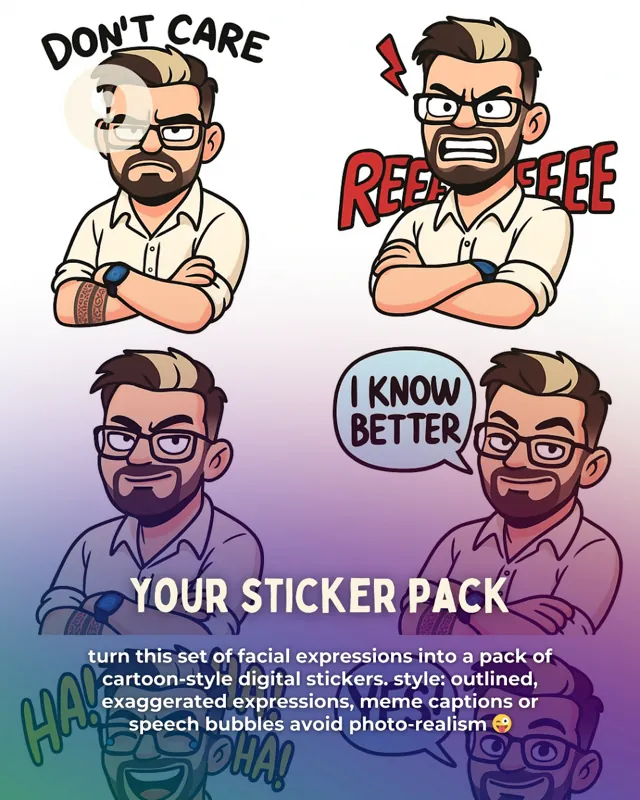
works best if you can give ChatGPT multiple photos with different expressions — but runs fine from a single photo too.
the “avoid photo-realism” note is what makes this actually a sticker pack instead of a collage. cartoon + exaggerated expression is the whole point. the speech bubbles add a meme layer that makes it actually shareable on its own.
prompt: turn this set of facial expressions into a pack of cartoon-style digital stickers. style: outlined, exaggerated expressions, meme captions or speech bubbles. avoid photo-realism
10. pixar me
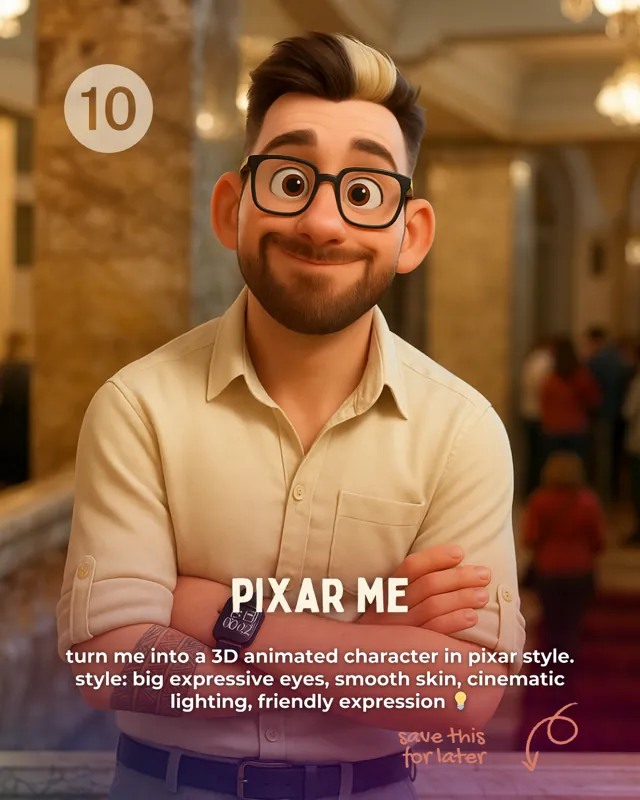
one of the most popular styles for a reason — the big expressive eyes and smooth 3D render make almost anyone look likeable. it’s the AI equivalent of a cartoon avatar that actually looks like you.
the “friendly expression” note matters more than it seems. without it, the result can look weirdly serious for a Pixar character. which is its own kind of funny, but probably not what you want.
prompt: turn me into a 3D animated character in pixar style. style: big expressive eyes, smooth skin, cinematic lighting, friendly expression
11. chart of my life
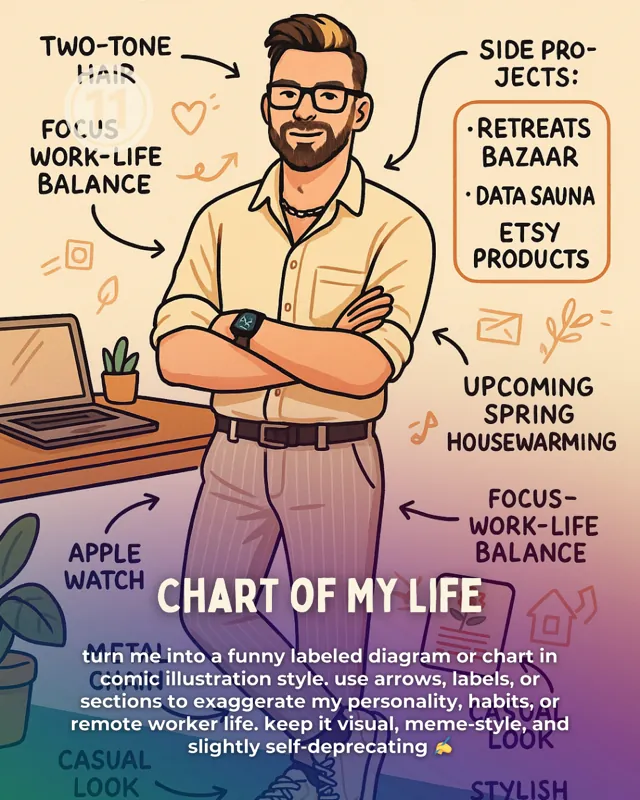
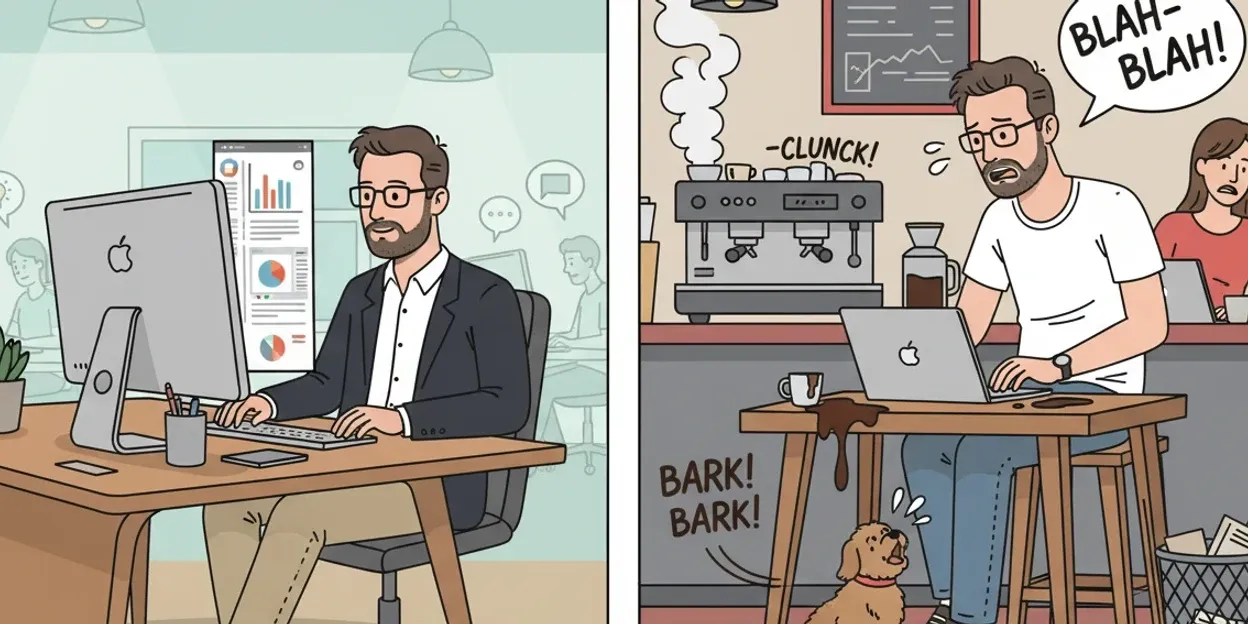
this one surprised me the most. give it a bit of context about your actual life and it builds something weirdly specific — labeled arrows, habits, side projects, all the stuff you’d draw on a napkin to explain who you are.
“slightly self-deprecating” is doing real work here. it keeps the output human and relatable instead of accidentally turning into a personal brand infographic about how productive you are.
prompt: turn me into a funny labeled diagram or chart in comic illustration style. use arrows, labels, or sections to exaggerate my personality, habits, or remote worker life. keep it visual, meme-style, and slightly self-deprecating
12. toy in a box
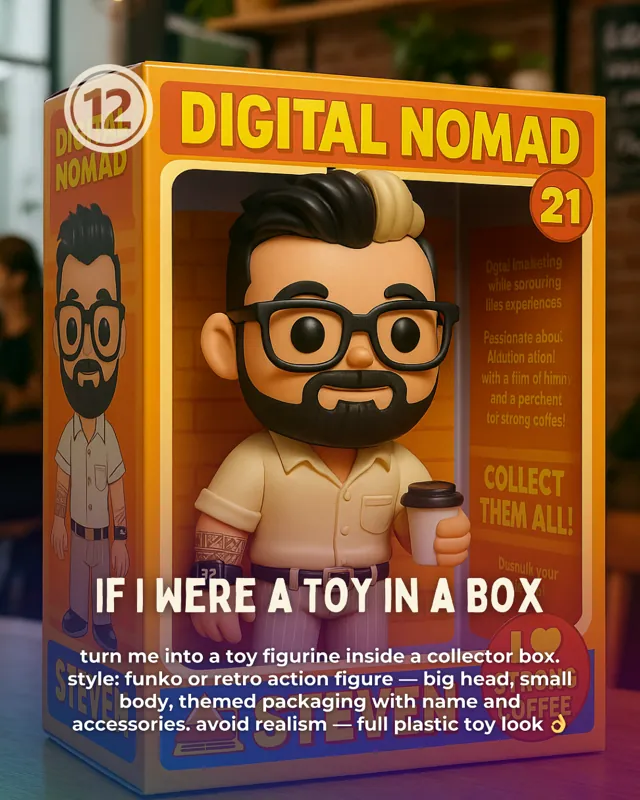
funko pop vibes, but you control the theme. mine came out as “Digital Nomad #21” with a collector’s box and little accessories. the big-head-small-body ratio is very accurate to the style.
“avoid realism” is doing the most important work. without it you drift into uncanny territory — something between a toy and a photo that doesn’t commit to either. full plastic look or nothing.
prompt: turn me into a toy figurine inside a collector box. style: funko or retro action figure — big head, small body, themed packaging with name and accessories. avoid realism — full plastic toy look
13. renaissance painting
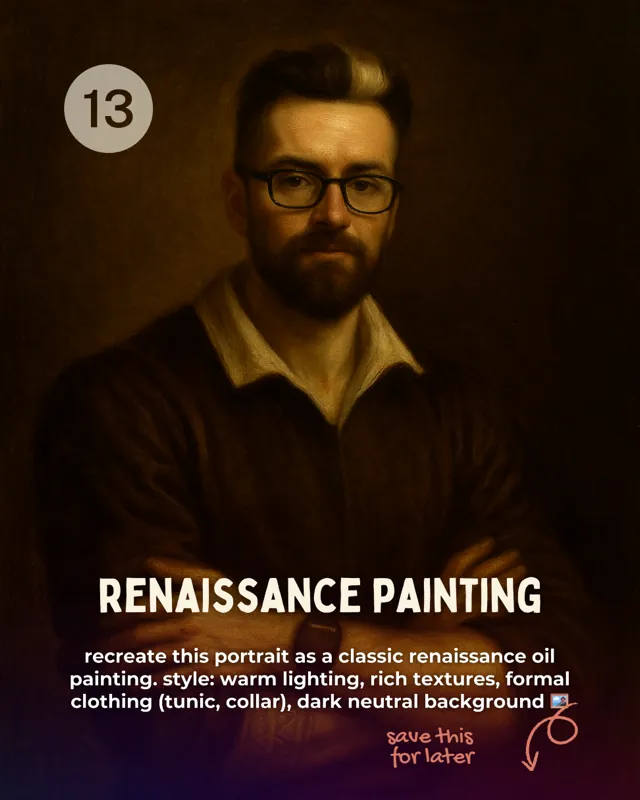
genuinely striking. the warm lighting and dark neutral background land exactly right. it looks like something that belongs in a museum with a three-paragraph placard next to it.
good candidate for a profile photo if you want to confuse people in the best way. the likeness holds surprisingly well in this style.
prompt: recreate this portrait as a classic renaissance oil painting. style: warm lighting, rich textures, formal clothing (tunic, collar), dark neutral background
14. paparazzi moment
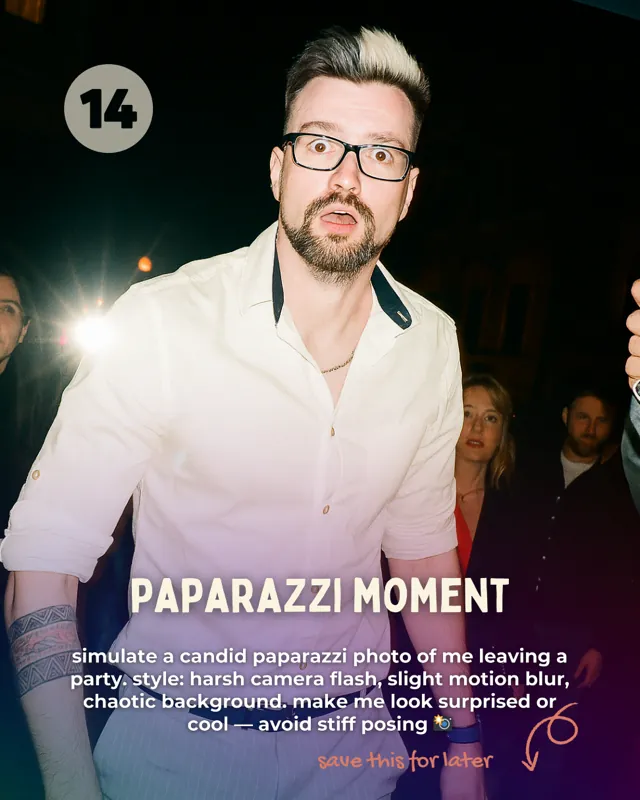
harsh flash + motion blur + chaotic background = surprisingly convincing. i was not expecting how real this one looked.
the “avoid stiff posing” note is what sells it. real paparazzi shots always catch something mid-motion — that’s the whole aesthetic. a stiff, well-composed photo immediately reads as staged.
prompt: simulate a candid paparazzi photo of me leaving a party. style: harsh camera flash, slight motion blur, chaotic background. make me look surprised or cool — avoid stiff posing
15. fake mugshot
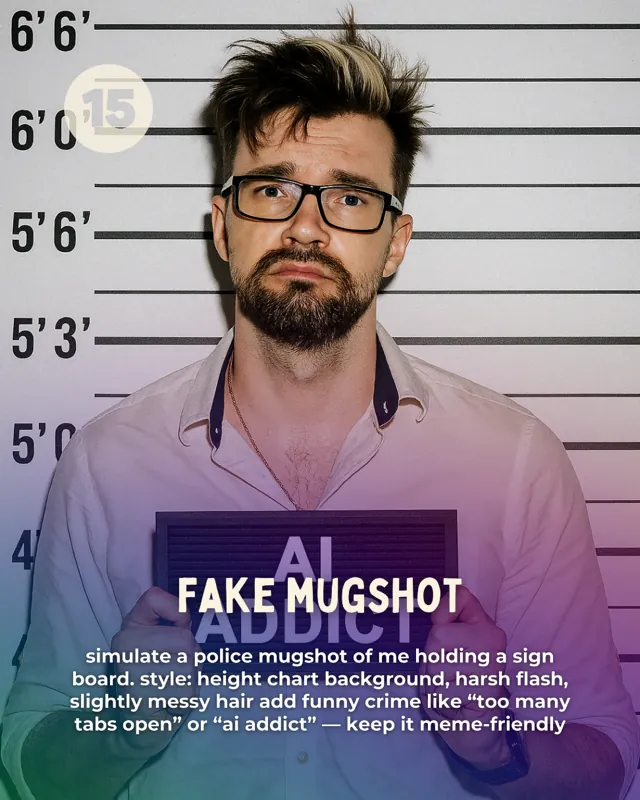
crime committed: “too many tabs open.” accurate.
fully meme territory, which is exactly the point. “keep it meme-friendly” prevents it from going too dark or too realistic. the sign board detail is what anchors the joke — customize the crime to fit your actual habits 😅
prompt: simulate a police mugshot of me holding a sign board. style: height chart background, harsh flash, slightly messy hair. add funny crime like “too many tabs open” or “ai addict” — keep it meme-friendly
16. from the drone
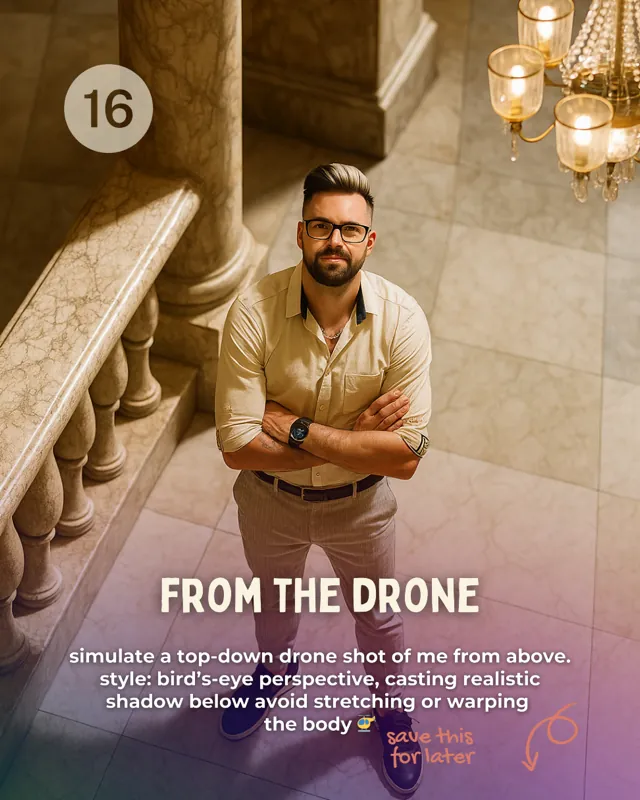
top-down perspective on a person is a strange angle that rarely looks natural. this prompt gets it right.
the “avoid stretching or warping the body” instruction is very specific but necessary. without it, proportions go weird. the shadow cast below is what adds the realism that actually sells the drone point of view.
prompt: simulate a top-down drone shot of me from above. style: bird’s-eye perspective, casting realistic shadow below. avoid stretching or warping the body
17. alien encounter selfie
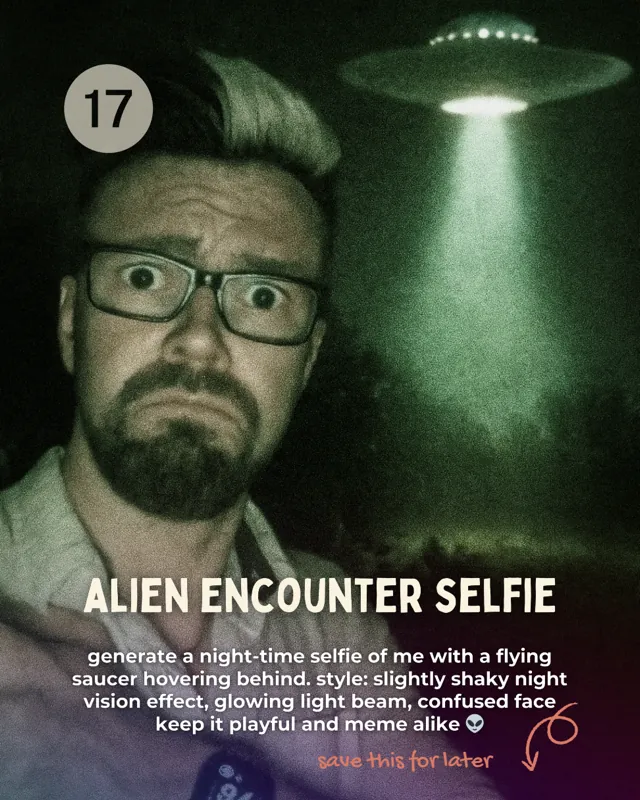
the night vision effect and slightly shaky camera create very convincing “this actually happened” energy. the glowing light beam is eerie. the confused face makes it human.
this one lives in the sweet spot between meme and actual content — the kind of image you can post without having to explain it.
prompt: generate a night-time selfie of me with a flying saucer hovering behind. style: slightly shaky, night vision effect, glowing light beam, confused face. keep it playful and meme alike
what i noticed running all 17
a few patterns that came up consistently — worth knowing before you start.
style direction beats subject direction. telling it how to render the image (painterly strokes, harsh flash, gradient backdrop) consistently outperformed telling it what to put in the image. the tool already knows what a shark or a Pixar character looks like. what it actually needs is the visual language — not the noun.
negative constraints often do more work than positive instructions. “no anime look,” “avoid photo-realism,” “avoid stiff posing” — these showed up in the best outputs. it’s an underrated move in prompt writing generally: defining what you don’t want is sometimes more precise than defining what you do.
likeness quality trades off against scene complexity. clean, simple styles — Simpsons, Pixar, plush toy — preserved my face better. the more elements the model has to juggle simultaneously (dramatic backgrounds, multiple style references, motion effects), the more it trades likeness accuracy for composition. pick your priority.
one photo is enough, but it matters which one. i ran everything from the same portrait. soft indirect light, frontal-ish angle, no heavy processing. that consistency made the comparison easier and kept the likeness more reliable across styles.