there are two types of nomad work fantasies.
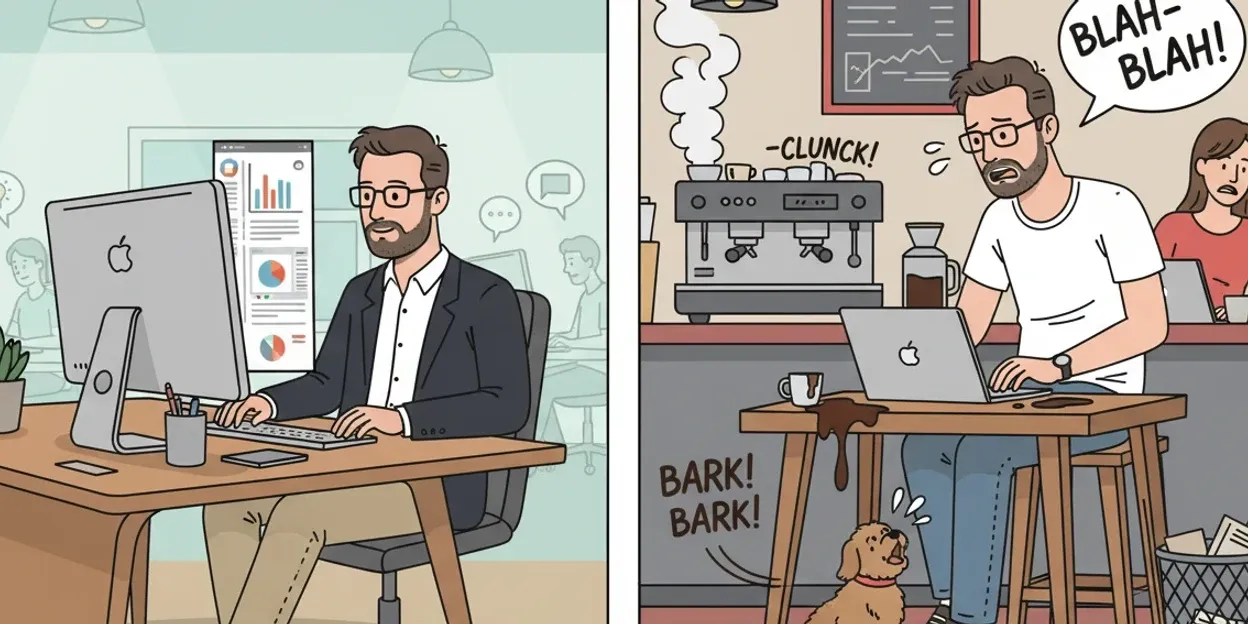
the first one is the shiny coworking version. ergonomic chair, big desk, quiet room, everyone around you building a startup or pretending to build a startup in a very convincing way.
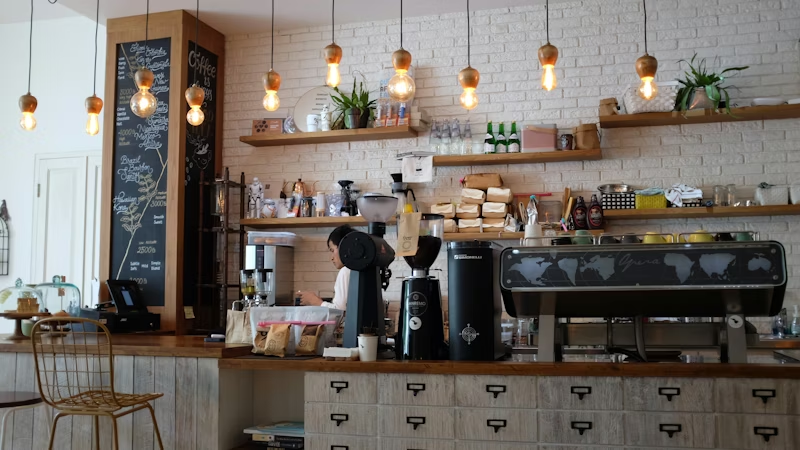
the second one is the cafe version. soft music, nice cup, good light, laptop open, little cinematic main character moment.
both are real.
both are also lying to you a little.
because the question is not really “coworking vs cafes?”
the question is: what kind of work are you trying to protect today?
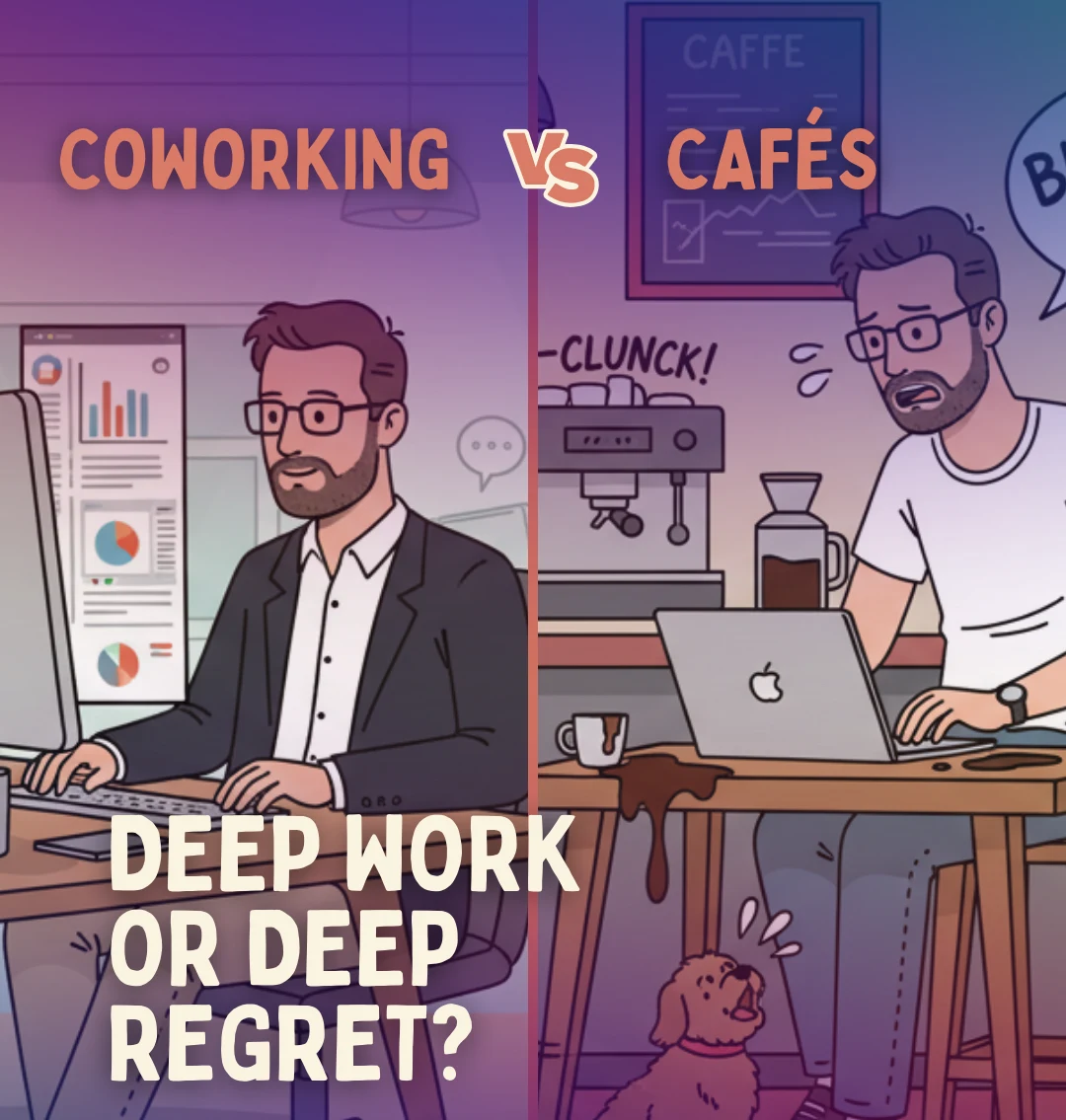
if i need to write, think, ship, plan, record, debug, or do anything that punishes interruptions, i usually go coworking.
if i need to answer messages, clean up small tasks, read, journal, do light admin, or trick my brain into not staring at the same wall again, i go cafe.
and if i work from the airbnb, it is usually because i am either being efficient or lying to myself. sometimes both.
focus is different everywhere
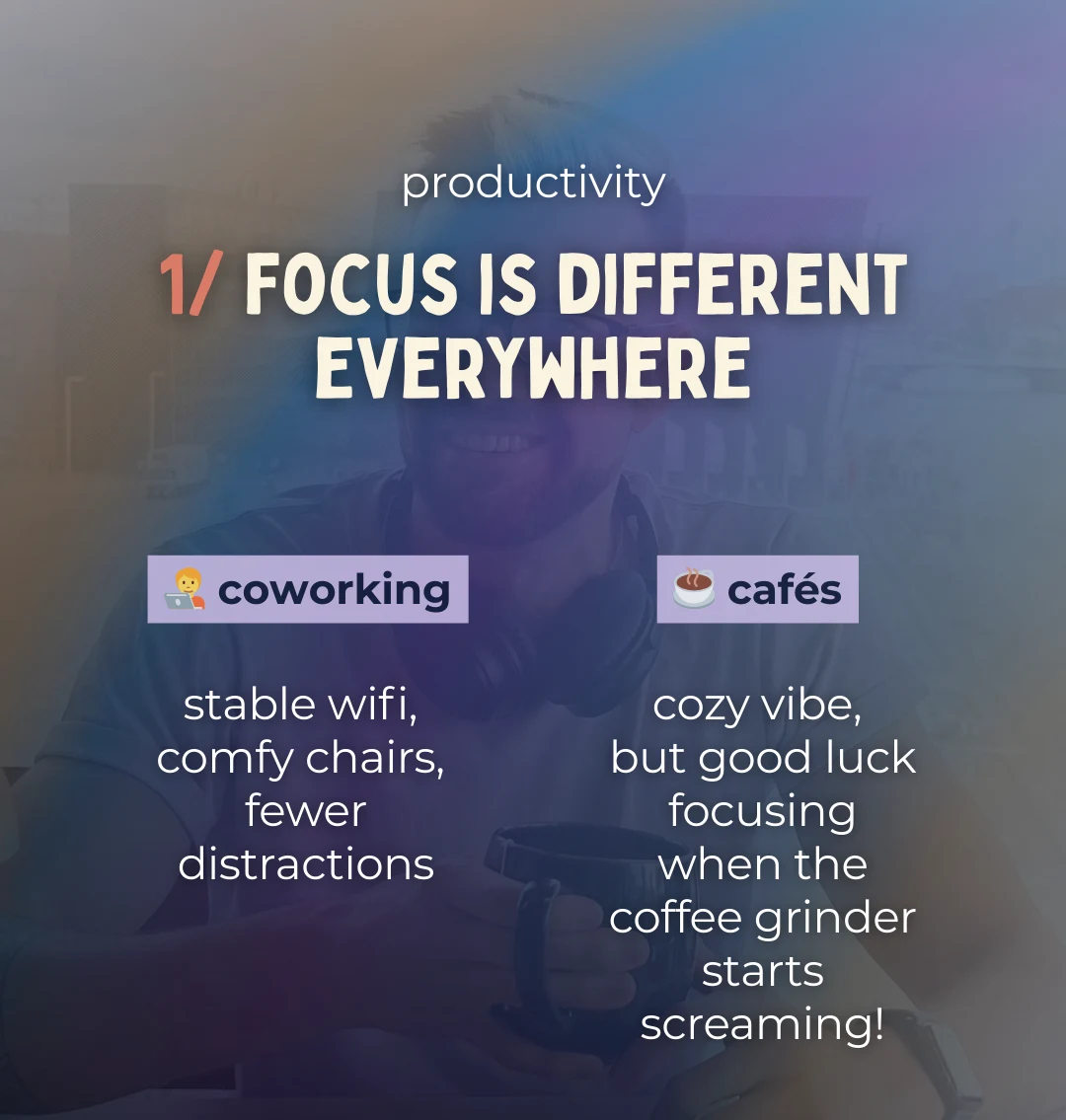
coworking spaces are boring in the exact way work often needs.
stable wifi. normal chairs. outlets that are not part of a treasure hunt. fewer people asking if the table is taken. less background chaos.
that boringness matters. deep work is delicate. it sounds dramatic, but it is true. you can lose a good thinking session to one bad chair, one weak router, or one barista deciding today is the day the milk steamer becomes a musical instrument.
cafes have a different kind of focus.
they are better for momentum than concentration. the vibe can help you start. the light can wake you up. the noise can make boring admin feel less boring. but the same things that make cafes feel alive also make them unreliable for serious output.
my rule is simple:
- if the work needs a clean mental runway, coworking.
- if the work just needs a little movement and atmosphere, cafe.
people you meet matter
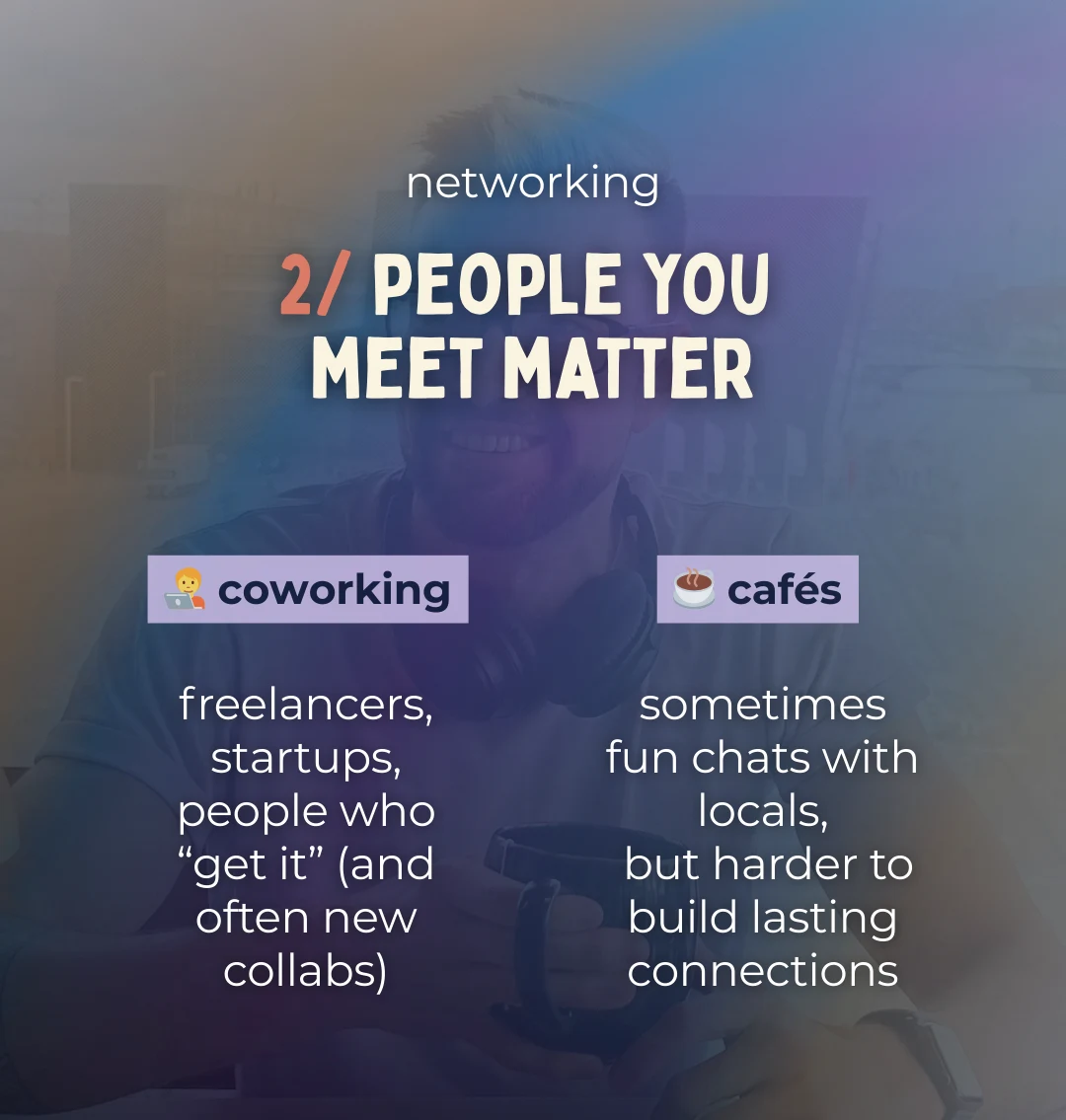
one underrated thing about coworking: people there usually understand the basic situation.
they know why you care about quiet rooms. they know why time zones are annoying. they know why a good standing desk can make you weirdly loyal to a place. you do not have to explain the whole remote-work operating system every time.
that makes coworking useful beyond the desk.
you meet freelancers, founders, operators, designers, engineers, coaches, marketers, and the occasional person whose job title sounds like it was generated during a layover. sometimes nothing happens. sometimes you get a friend. sometimes you get a client, a collaborator, or one honest warning about a neighborhood you were about to book for a month.
cafes are better for local texture.
you overhear the city. you see normal life. you learn which streets feel good. sometimes you chat with someone at the next table. but it is harder to build repeated contact unless you keep showing up to the same place at the same time.
so again, annoying answer: depends what you need.
community and professional overlap? coworking.
local atmosphere and a soft landing into the city? cafes.
your wallet feels it
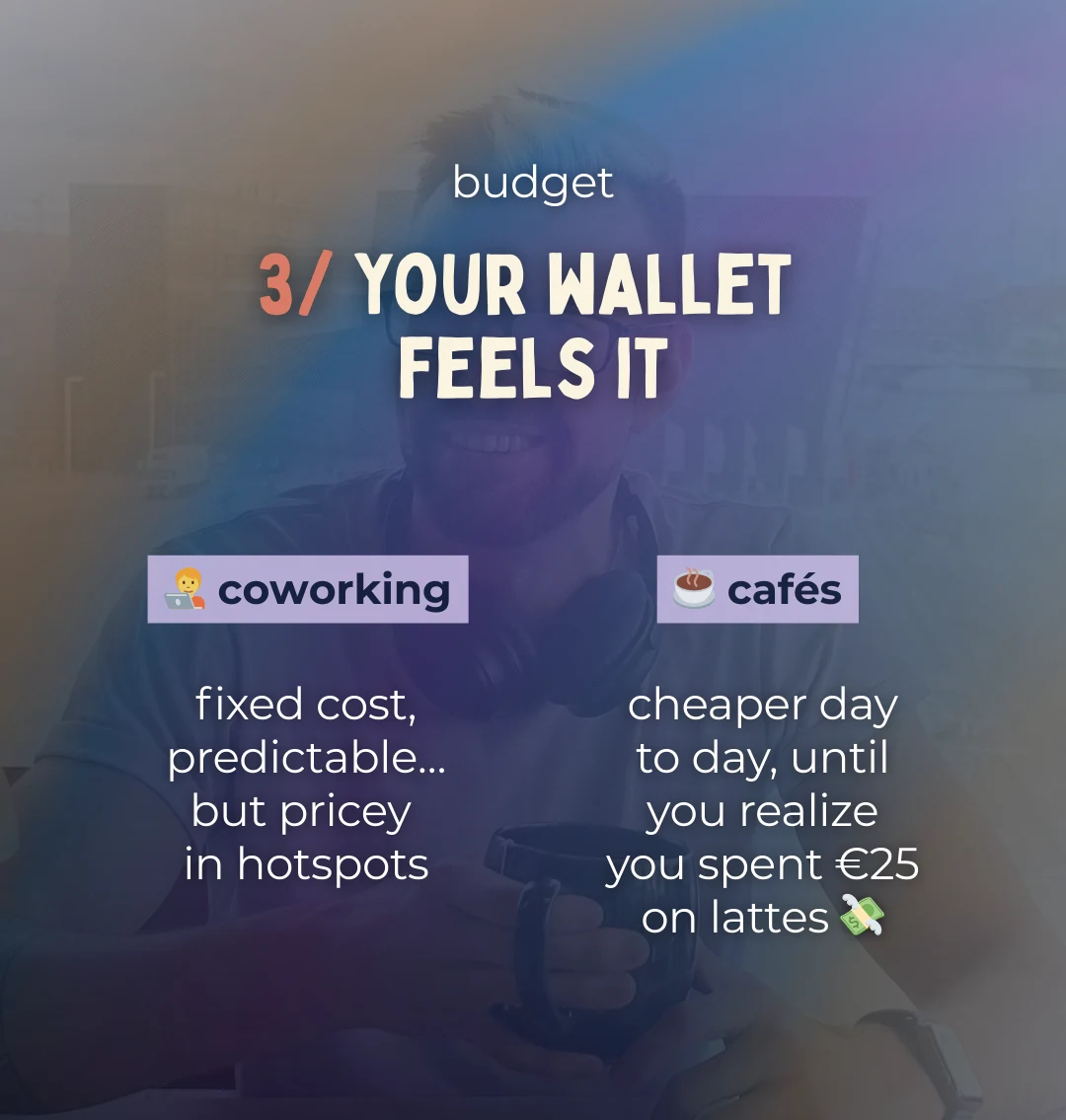
coworking feels expensive because the cost is obvious.
you see the day pass. you see the monthly membership. you compare it to rent and groceries and suddenly the chair has to justify its existence.
cafes feel cheap because each decision is small.
one coffee. maybe lunch. another coffee because you have been there too long and now you feel morally obligated. maybe a pastry because the wifi came back and you are grateful.
then you look at the month and realize your “cheap workspace” quietly became a subscription with worse chairs.
this does not mean coworking is always better value. in some cities, coworking prices are silly. in some cafes, you can work comfortably for a few hours, spend fairly, and everyone is happy.
but compare the real cost, not the emotional cost.
the real cost includes:
- money spent to sit there
- work lost to distractions
- calls you could not take
- body pain from bad ergonomics
- time wasted finding a better spot
- the stress tax of unstable wifi
sometimes the paid coworking desk is the cheaper option because it protects the day.
when do you feel free?
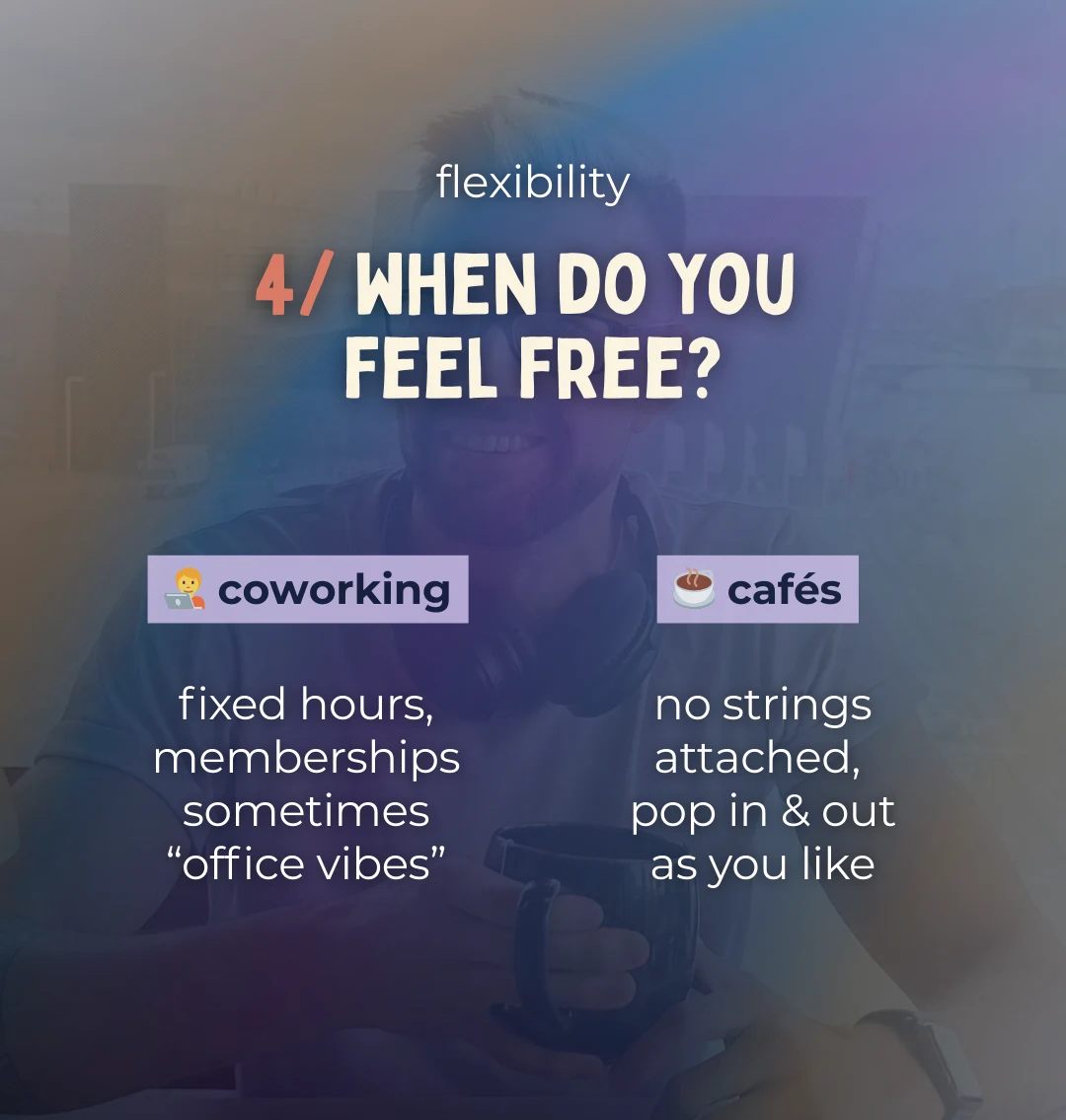
cafes win on freedom.
no membership. no badge. no onboarding tour. no one explaining the printer policy with the seriousness of airport security.
you walk in, order something, open the laptop, do the thing, leave.
that flexibility is beautiful when your day is loose. maybe you only have two hours. maybe you are exploring a new neighborhood. maybe you want to stack a work block between the gym and an errand. cafes make that easy.
coworking is more structured.
sometimes that structure feels like a gift. sometimes it feels like accidentally recreating the office you left, just with more plants and a slightly more confusing coffee machine.
the trick is to notice which kind of freedom you actually want.
freedom from commitment? cafe.
freedom from friction? coworking.
those are not the same thing.
the vibe changes everything
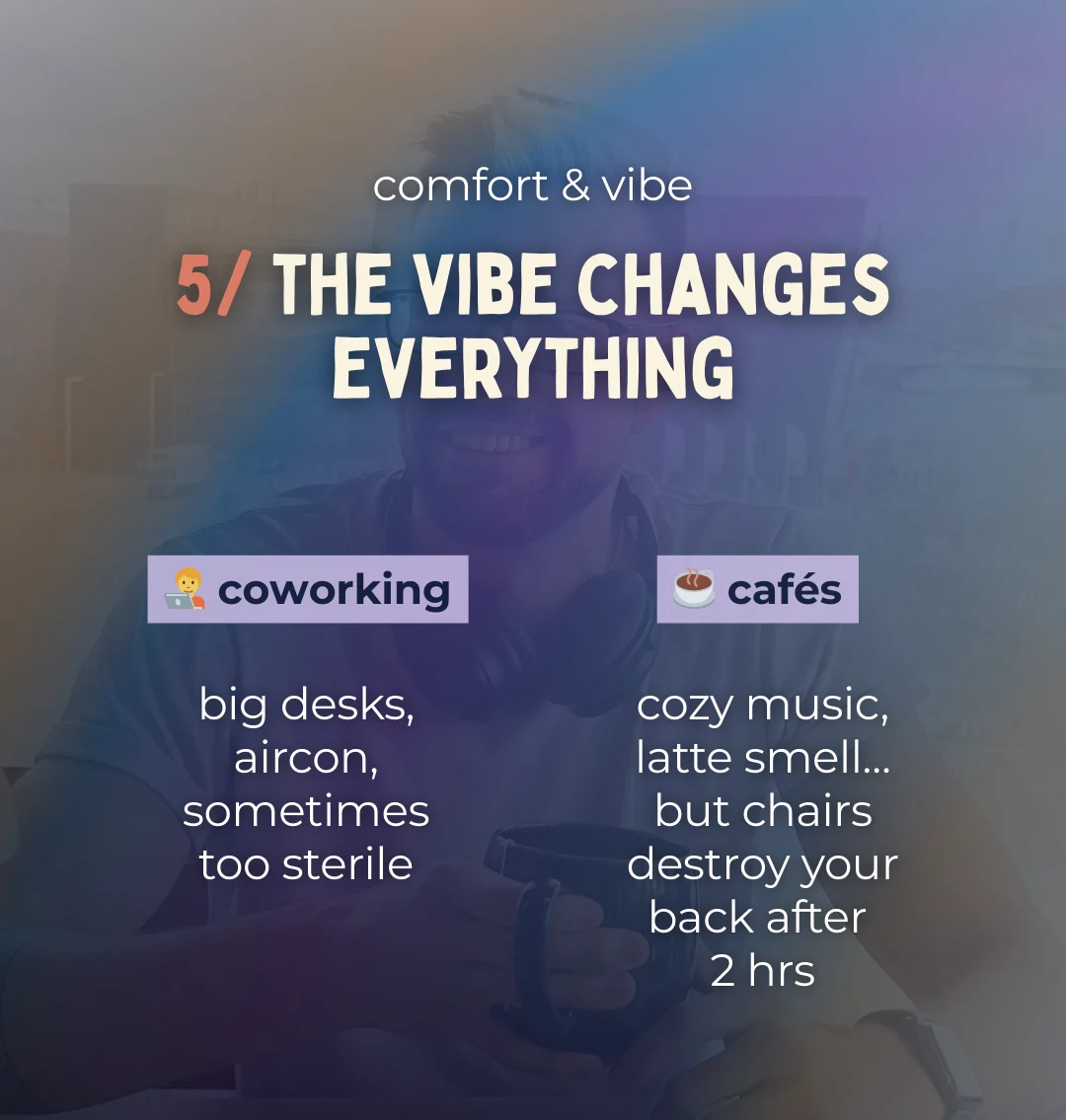
vibe is not superficial.
it affects how long you can stay, how your body feels, how your brain enters the work, and whether the day feels like a punishment.
coworking can be too sterile. some spaces feel like someone tried to make productivity smell like beige. big desk, cold light, too much silence, everyone typing like they are defusing something.
cafes can be too alive. great for a morning reset, terrible for a client call. cozy music until the playlist decides your quarterly planning session needs experimental jazz.
the best setup is having both types of energy available.
i like coworking when i need to be serious.
i like cafes when i need to feel like a person again.
and i leave as soon as the chair starts negotiating with my spine.
do not forget your stuff
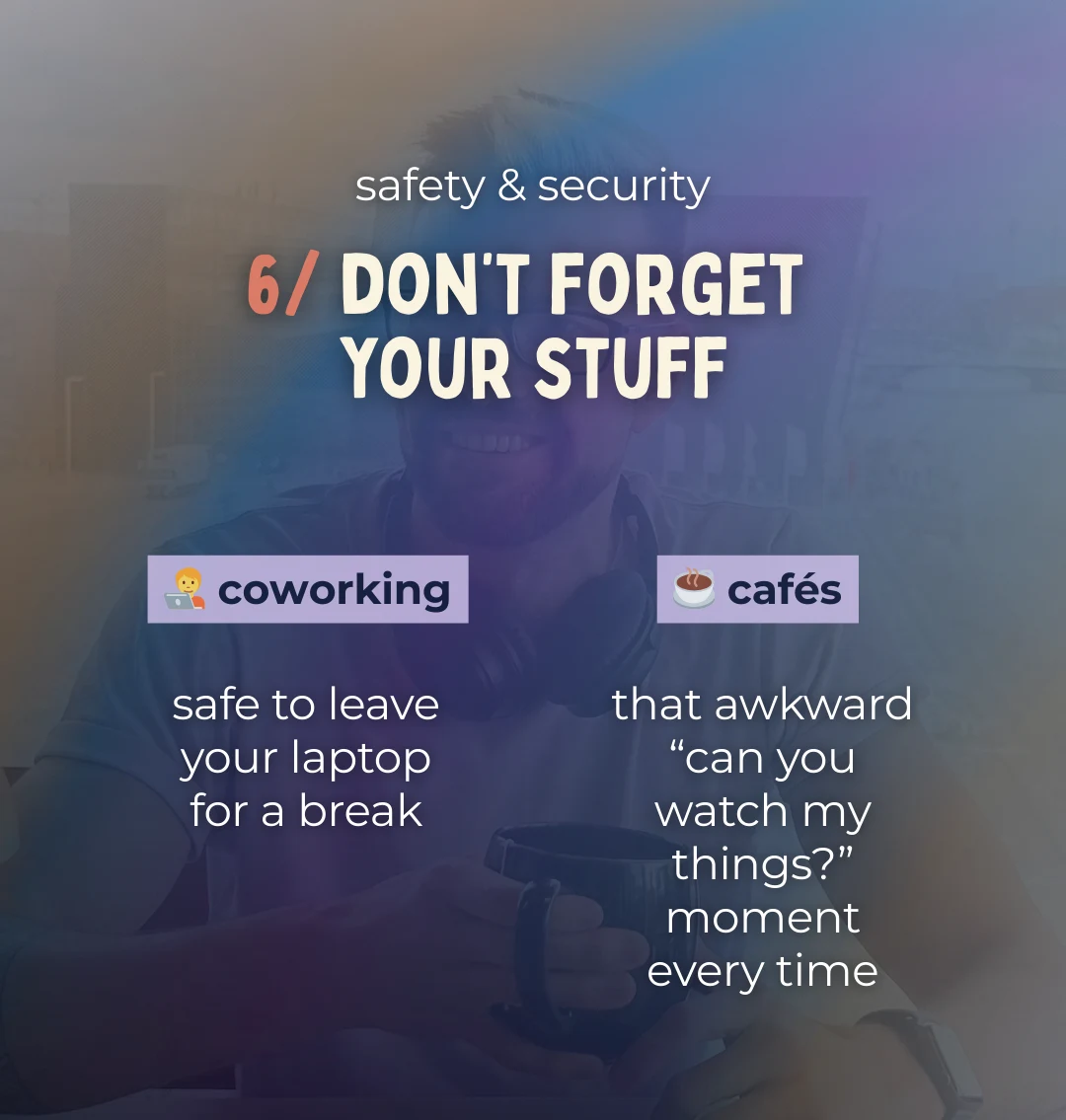
this is the least glamorous point and maybe the most practical.
in a coworking space, i can usually leave my laptop for two minutes, refill water, go to the bathroom, come back, and not feel like i just ran a personal security drill.
in a cafe, every bathroom break becomes a small moral puzzle.
do i pack everything?
do i ask the stranger next to me to watch my stuff?
do i trust the stranger because they have glasses and look busy?
do i bring the laptop but leave the charger and hope thieves have standards?
none of this is dramatic, but it eats attention.
if i am carrying important gear, taking calls, or working in a place i do not know well yet, coworking gives me one less thing to think about.
that is worth more than people admit.
where you end up
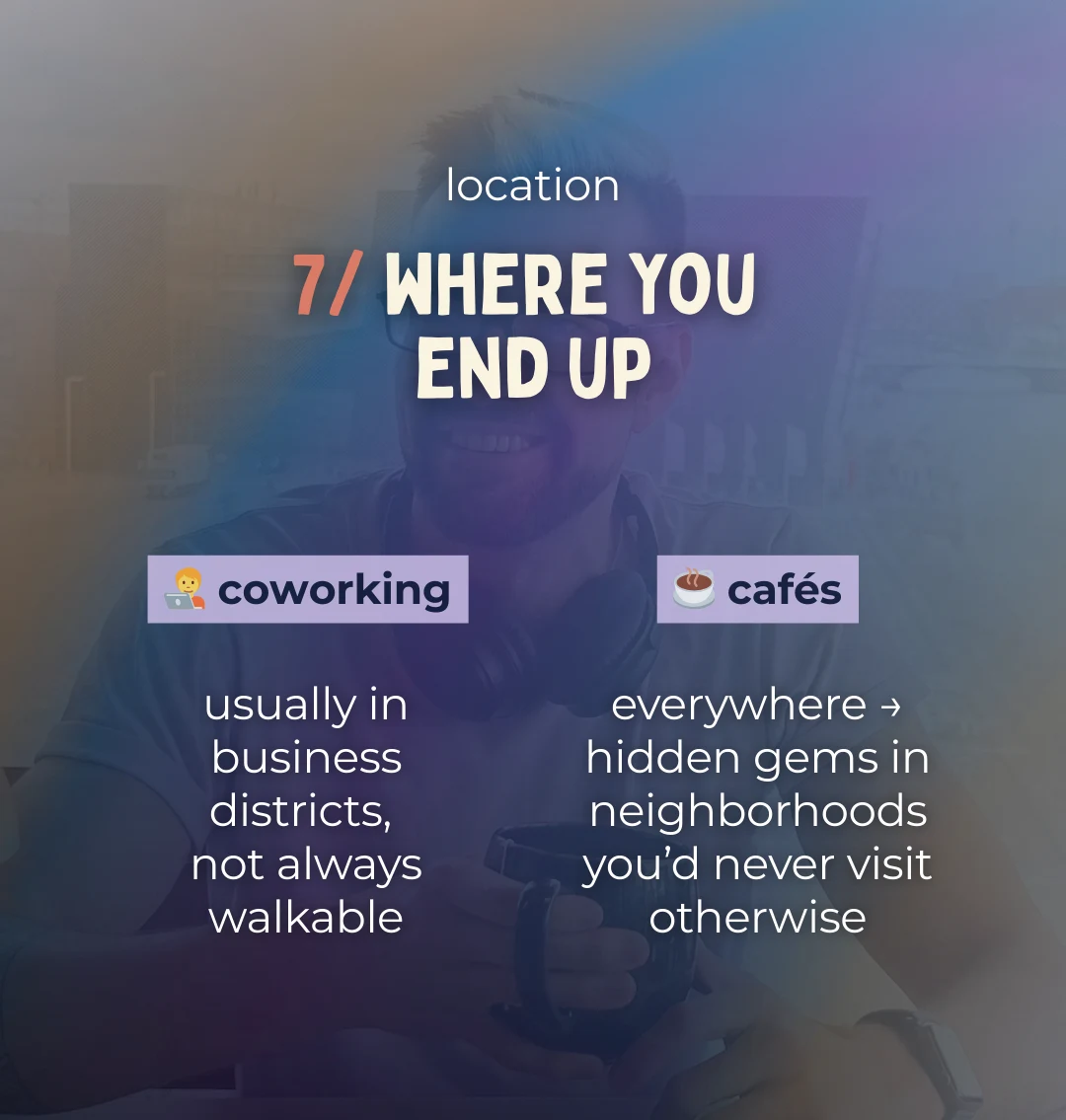
coworking spaces are often where work infrastructure lives.
business districts. central areas. newer buildings. places with elevators, meeting rooms, and the quiet feeling that everyone is paying too much for something.
that can be useful. it can also be disconnected from the city you came to experience.
cafes pull you into neighborhoods.
you find the bakery with the good corner table. the place with strong wifi and weak chairs. the cafe where the owner knows everyone. the street you would never have walked down if you were only optimizing for desk quality.
this is why i do not want coworking to replace cafes completely.
coworking protects the work.
cafes help me actually meet the place.
a good nomad setup needs both.
i usually mix both
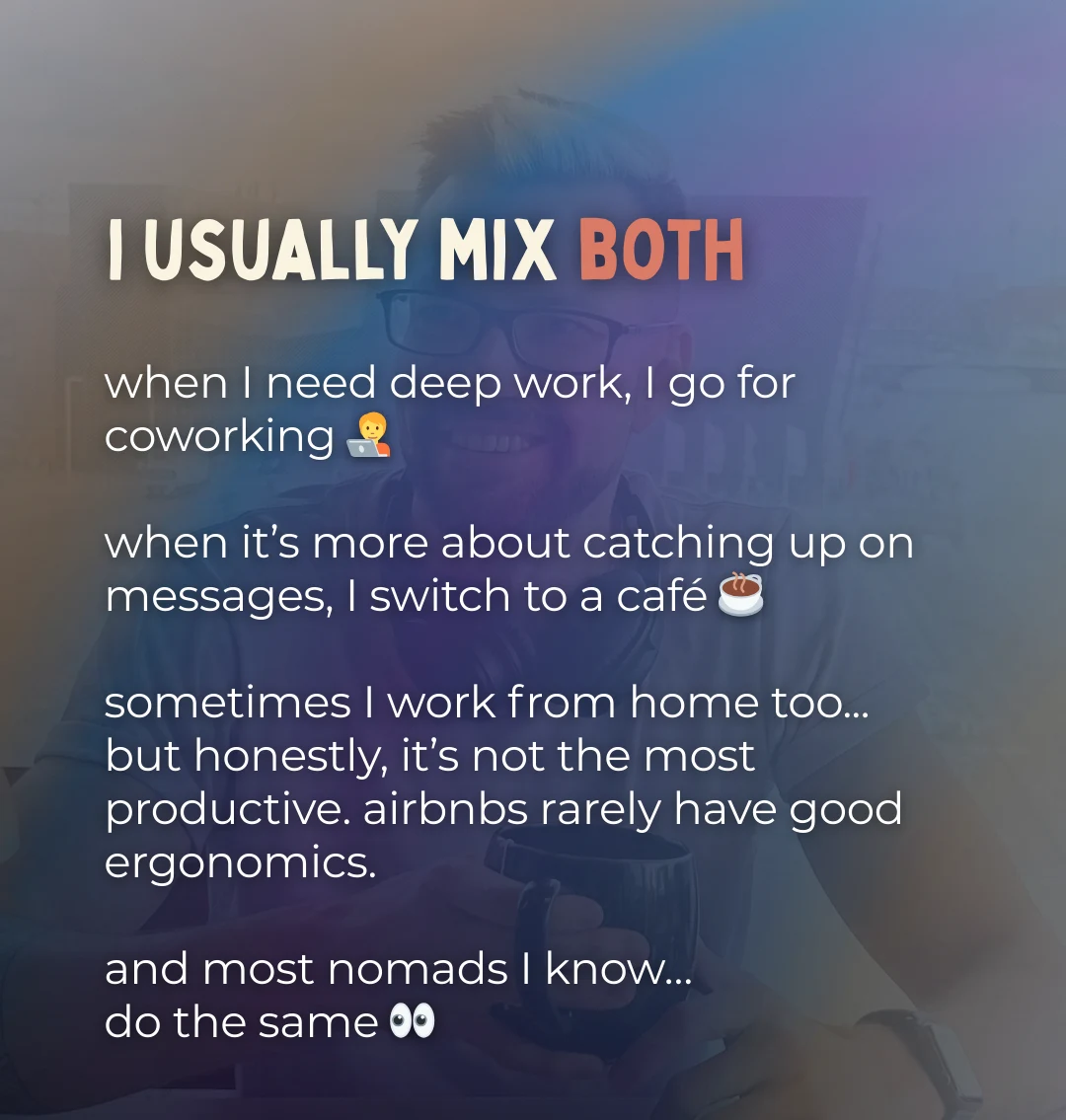
my actual routine is not romantic.
it is usually:
- coworking when i need deep work
- cafe when i need messages, light admin, or a change of scene
- home when the apartment has a real chair, real table, and internet that does not behave emotionally
the home part is the one people overestimate.
airbnbs rarely have good ergonomics. a table can look fine in photos and still be exactly the wrong height for a human body. “dedicated workspace” sometimes means a stool next to a decorative bowl.
so i do not build my week around the apartment unless i have tested it.
the first few days in a new city, i scout:
- one serious workspace
- one reliable cafe
- one backup cafe
- one emergency quiet place for calls
that is enough. not perfect. enough.
my cafe survival hacks
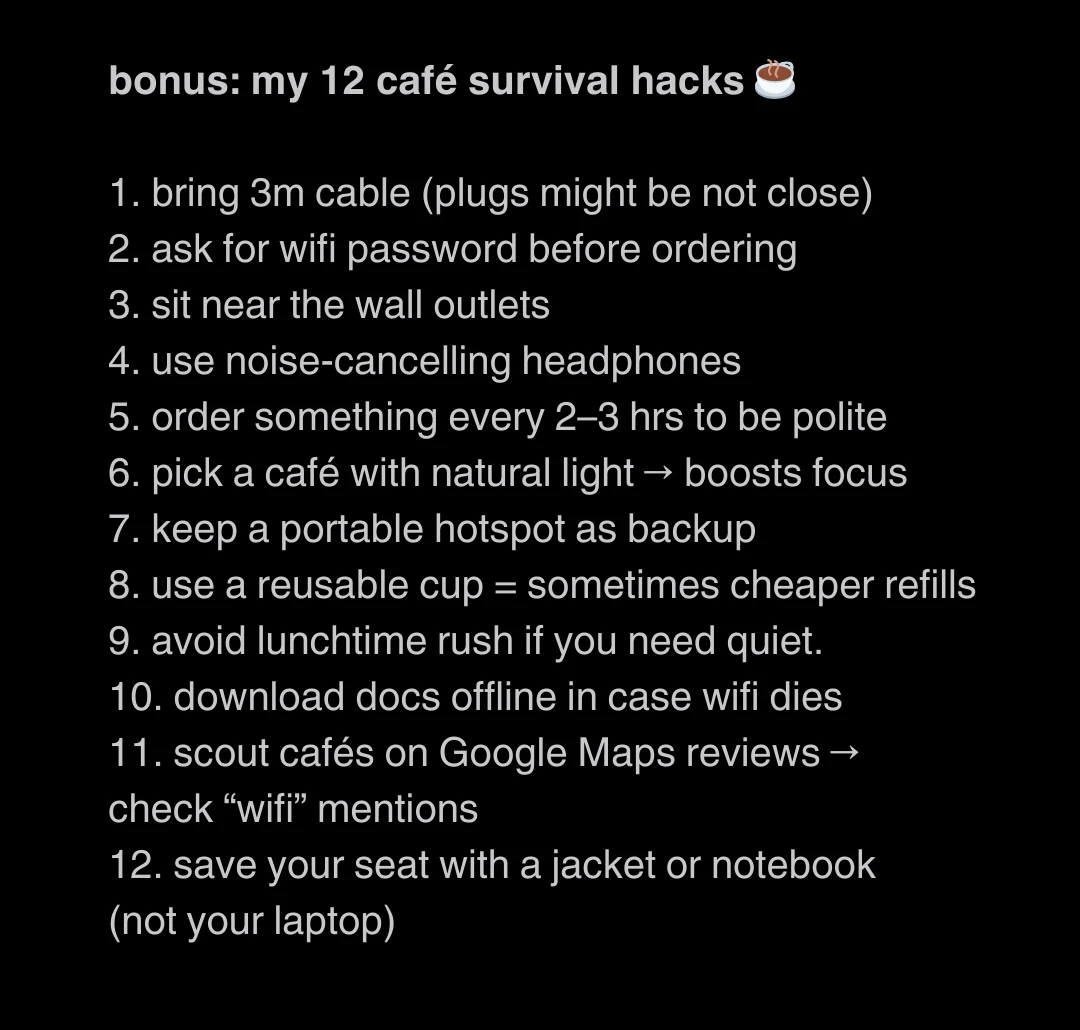
if you are going to work from cafes, make it easier on yourself.
small things save the day:
- bring a 3m cable because plugs are rarely where hope says they are.
- ask for the wifi password before ordering if you truly need wifi.
- sit near wall outlets, not in the beautiful but powerless table by the window.
- use noise-cancelling headphones.
- order something every 2-3 hours if you are staying long.
- pick cafes with natural light. it helps more than it should.
- keep a portable hotspot as backup.
- use a reusable cup if refills are cheaper or the place supports it.
- avoid lunch rush when you need quiet.
- download docs offline in case the wifi dies.
- scout Google Maps reviews for “wifi” before you walk across town.
- save your seat with a jacket or notebook, not your laptop.
none of this is genius.
that is the point.
good nomad systems are mostly boring little frictions removed in advance.
the decision rule
if you are choosing between coworking and a cafe today, ask this:
what would make me lose the day?
if the answer is bad wifi, noise, no outlets, uncomfortable seating, or having nowhere to take a call, pay for coworking.
if the answer is boredom, isolation, cabin fever, or being too stuck in your own head, go to a cafe.
the mistake is treating every workday the same.
some days need protection.
some days need movement.
and some days you need to admit the laptop on the bed thing is not a productivity strategy. it is just a soft surface with consequences.